


I still remember the day I published my 47th blog post and checked my earnings dashboard — $0.00. Again.
I had spent three months writing what I thought was genuinely useful content. I was consistent. I was passionate. But I was completely clueless about how to actually turn any of that effort into money. Nobody told me there was a gap between “having a blog” and “making money from a blog,” and that gap can swallow you whole if you don’t have a plan going in.
Eventually, things clicked. Not overnight, but slowly — after a lot of trial, error, and a few embarrassing mistakes I’ll tell you about along the way. If you’re sitting where I was, wondering why the money isn’t following the work, this is the article I wish someone had handed me.
Let’s get into it.
First, a Realistic Expectation Check
Blogging income is real. I’m not going to promise you’ll replace your salary in 90 days, because the people who make that claim are usually selling you a course. What I will tell you is that bloggers do make full-time incomes — some make far more than that — but it almost always takes six to eighteen months of consistent work before you see meaningful numbers.
The bloggers who quit at month four? They never find out what month seven would have looked like.
Okay. With that said, here are the seven methods that actually work.
1. Display Advertising (The Slow Starter That Keeps Paying)
This is usually the first thing new bloggers try, and there’s nothing wrong with that — but the expectations are almost always off.
Google AdSense is the most beginner-friendly option. You paste a code snippet into your site, Google serves relevant ads, and you earn a small amount every time someone clicks or views them. It’s passive, it’s easy to set up, and it’s a nice psychological milestone when you see those first few dollars trickle in.
The problem is the math at low traffic. If you have 2,000 monthly visitors, you might earn $5–$15 from AdSense. That’s not nothing, but it’s not rent money either.
Once you start getting 25,000–50,000 monthly sessions, you unlock better ad networks like Mediavine or Raptive (formerly AdThrive). These pay significantly more — sometimes 3x to 5x what AdSense pays — because they have premium advertiser relationships and smarter ad placements.
My mistake early on: I slapped ads on every page before I had real traffic, which hurt the user experience without generating any meaningful income. Focus on content and traffic first. Ads reward patience.
2. Affiliate Marketing (The Method That Changed Everything for Me)
This is where things got interesting for me personally.
Affiliate marketing means you recommend a product or service, and when someone buys through your unique link, you earn a commission. No inventory. No customer service. No dealing with shipping or returns. You just write honestly about something you’ve used, include a link, and let the retailer handle everything else.
Amazon Associates is the most well-known program, though the commissions are low (usually 1–4%). Better options exist in almost every niche — software tools, hosting companies, online courses, financial products, and physical goods all have affiliate programs with much higher payouts.
The key that nobody tells beginners: affiliate marketing works best when the recommendation fits naturally into content people are already searching for. A post titled “best laptop for graphic designers under $1,500” is already attracting buyers. Someone landing on that page has their wallet mentally ready. A generic post titled “my favorite things” is not.
Write content with buyer intent. Think about what someone types into Google when they’re 80% of the way to a purchase decision. That’s your target.
One mistake I made: I used to disclose my affiliate relationships in tiny text at the very bottom of posts. That’s both legally risky (the FTC requires clear disclosure) and bad for trust. I started disclosing right at the top of posts and weirdly, conversions went up. Readers who trust you buy through your links more readily than readers who feel tricked.
3. Selling Your Own Digital Products
This is where the income ceiling really opens up.
When you earn from ads or affiliates, someone else is setting the price and taking most of the money. When you sell your own product, you keep nearly all of it.
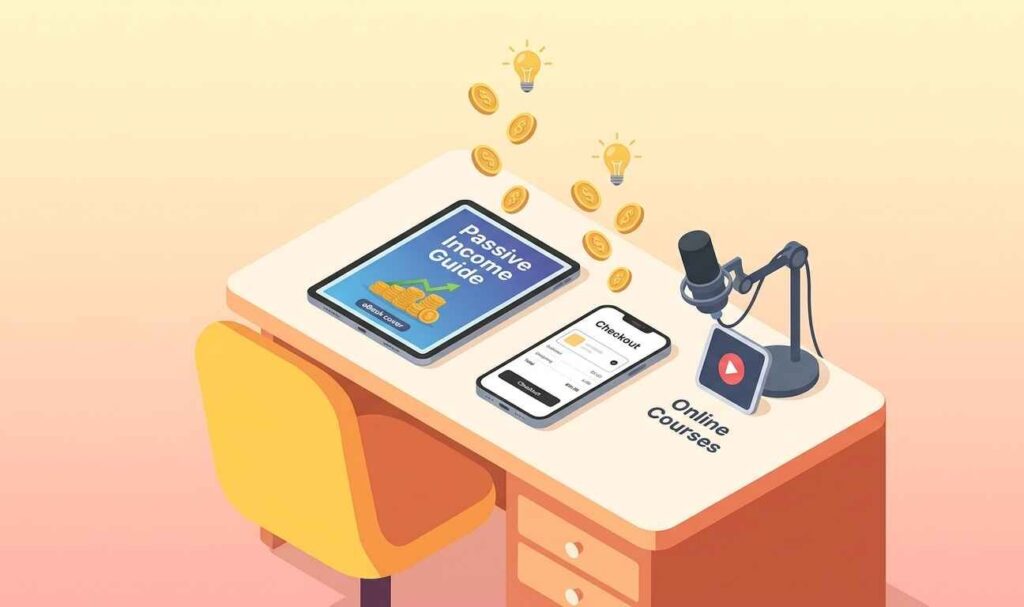
Digital products — eBooks, templates, Notion dashboards, Lightroom presets, Excel spreadsheets, printables, mini-courses — have zero inventory cost and scale beautifully. You create it once and sell it indefinitely.
The sweet spot is solving a specific, annoying problem your readers have. If you blog about personal finance and your readers keep asking how to set up a budget, a $17 budgeting spreadsheet template is an obvious product. If you blog about travel and people love your packing lists, a “digital travel planner” can sell surprisingly well.
Platforms like Gumroad, Lemon Squeezy, or even Shopify make it straightforward to set up a simple digital storefront. You don’t need to be a developer.
Start simple. My first product was an eBook that took me two weekends to write. It wasn’t perfect. But it sold, and that feeling of making money from something completely your own is genuinely different from ad revenue.
4. Online Courses and Workshops
This is the next level up from digital products.
If you have real expertise in something — photography, SEO, cooking techniques, fitness, copywriting, coding, whatever — a structured online course can generate significant income. Platforms like Teachable, Thinkific, and Podia make it relatively painless to build and host a course without technical headaches.
The difference between an eBook and a course isn’t just price (though courses typically sell for $97–$500+). It’s the transformation you’re promising. An eBook shares information. A course guides someone through a process with a clear outcome.
Here’s the thing I got wrong the first time: I built the course before validating that anyone would buy it. I spent six weeks creating content for a course that I sold to exactly four people. Painful.
Now I pre-sell. I write a simple landing page describing the course, set up a waitlist or presale link, and only build the content after I’ve confirmed real demand with real purchases. It sounds backwards, but it saves months of wasted work.
5. Sponsored Content and Brand Partnerships
Brands pay bloggers to write posts featuring their products. Simple concept, but the execution matters a lot.
When you’re small (under 10,000 monthly readers), these deals are usually low-value or completely nonexistent. As your audience grows and you develop a reputation in your niche, brands start reaching out — or you can reach out to them directly.
The key is only partnering with brands your readers would actually thank you for introducing them to. I’ve turned down sponsored posts that paid well because the product felt off for my audience. The short-term money isn’t worth the long-term trust erosion.
Pricing for sponsored posts varies wildly. A blogger with 50,000 monthly visitors in a focused niche might charge $300–$800 for a single sponsored post. Bloggers with larger or more premium audiences can charge several thousand.
Always disclose sponsored content. Again — FTC requirement, and also just the right thing to do.
6. Freelance Writing and Consulting
Your blog is a portfolio whether you intend it to be or not.
Once you’ve been writing publicly for a while, you’ll likely get messages from other publications, businesses, or brands asking if you’d write for them. This is how a lot of bloggers build a solid freelance writing income while their blog’s passive revenue is still growing.
The blog proves you can write. It proves you understand a topic. It gives a potential client something concrete to evaluate before hiring you.
Beyond writing, if your blog establishes you as an expert in something — marketing, fitness, law, finance, parenting, tech — people will pay for consulting. Even a one-hour “strategy call” billed at $150–$300 can add meaningful income without much additional work.
7. Email List Monetization
This one is less talked about as a standalone method, but it’s foundational to all the others.
Your email list is the only audience you truly own. Social media algorithms change, Google updates tank search rankings overnight, and platforms die. Your email list goes with you regardless of what happens externally.
Every product launch, affiliate recommendation, sponsored mention, and course sale performs better when sent to a warm email audience that already knows and trusts you. I’ve seen a single email to a list of 3,000 engaged subscribers outperform three months of search traffic for a specific offer.
Tools like ConvertKit (now rebranded as Kit), MailerLite, and Beehiiv make it easy to build and manage a list. Offer something genuinely useful in exchange for the signup — a checklist, a free mini-course, a resource guide — and focus on sending emails people actually want to read.
The bloggers who make the most money almost always have strong email lists. It’s not a coincidence.

Common Mistakes That Cost People Time and Money
A few things worth avoiding based on what I’ve seen and personally experienced:
Trying to monetize too early is probably the biggest one. If you’re writing posts nobody is reading yet, adding affiliate links and ads is mostly just noise. Build traffic first. Monetize once people are actually showing up.
Picking a niche purely for money without any real interest or knowledge is another trap. You can usually sustain fake enthusiasm for about three months before it collapses. Write about something you actually know or care about, and trust that audiences sense authenticity.
Ignoring SEO entirely is something a lot of creative bloggers do, and it limits reach drastically. You don’t need to become an SEO nerd, but understanding basic things — like writing around search terms people actually use, structuring posts clearly, and getting other sites to link to yours — makes a significant difference. Tools like Ahrefs, Semrush, or even the free version of Ubersuggest can help you find what people are searching for in your niche.
Finally, not building an email list from day one. Seriously. Start the list before you think you need it. The best time was your first post. The second best time is today.
Where to Actually Start
If you’re brand new, here’s a realistic path:
Spend the first three months writing 2–3 high-quality posts per week, focused on search terms people are actively looking for in your niche. Don’t worry about money yet. Build the foundation.
Around month three or four, start an email list and add a simple affiliate link or two to your most-read posts. See what resonates.
By month six, if traffic is growing, look at a simple digital product — something small that solves a specific problem. Something you could create in a weekend.
After that, layer in what makes sense for your specific audience: courses if you have deep expertise, sponsorships if brands fit naturally, ad networks once traffic justifies the better-paying options.
There’s no single right combination. The bloggers who do well mix several of these methods in ways that match their audience and their own strengths.
One Last Thing
The bloggers I’ve seen succeed aren’t necessarily the most talented writers or the most technically sophisticated. They’re the ones who kept going past the point where most people quit.
Month two looks a lot like month ten when nothing has happened yet. The difference is that the person who makes it to month ten usually has something to show for it — traffic that compounds, an email list that’s slowly growing, maybe a first product that’s starting to sell.
The work you do now pays you later. That’s not a motivational poster — it’s genuinely how this model works.
Pick a method, start there, and don’t let perfect be the reason you never begin.