

My first semester of college, I had exactly $47 in my bank account after paying for textbooks. I remember staring at my laptop at 2 a.m., watching YouTube videos about “making money online” and feeling equal parts hopeful and suspicious. Most of what I found was garbage — drop shipping gurus selling courses, crypto schemes, “just invest in real estate” advice from people who clearly didn’t understand what broke meant.
But over the next two years, I actually figured out a few things that worked. Not “quit school and buy a Lambo” things — real, slow-burning income streams that started paying out while I was still studying for exams. Some made me $20 a month at first. One eventually got to $300+. None of them required upfront capital I didn’t have.
Here’s what actually worked, and what didn’t.
1. Selling Digital Notes and Study Guides
This one surprised me the most. I’ve always been the person who over-prepares notes — color-coded, detailed, almost obsessively organized. A friend suggested I put them on Etsy one day, half as a joke. I didn’t think anyone would buy a PDF of chemistry notes from a random student.
I was wrong.
I set up a free Etsy shop, converted my notes into clean PDFs using Canva (also free), and listed them for $3–$7 each. The first sale came within two weeks. By the end of the semester, I had made just over $140 from notes I’d already written for myself.
The key is that these are genuinely useful notes — not copied from a textbook, but the kind of summaries and breakdowns that actually help someone understand a concept fast. GCSE revision notes, university-level biology breakdowns, law case summaries — they all sell consistently on platforms like Etsy, Payhip, and Gumroad.
You create it once. It sells while you sleep. That’s the whole point.
Getting started: Pick your best subject. Organize your existing notes into a clean, readable format using Canva. List it on Gumroad (zero upfront cost, they take a small percentage per sale). Price between $3–$10 depending on depth.
What I did wrong: I waited too long to start because I thought my notes weren’t “professional enough.” They didn’t need to be. Students want clarity, not corporate polish.
2. Print-on-Demand (Without Touching Inventory)
I have a friend who designed a mug with a funny biology joke on it, uploaded it to Redbubble, and completely forgot about it. Six months later, he checked his account and had $83 sitting there.
Print-on-demand is one of those passive income streams that genuinely requires almost no money to start. Platforms like Redbubble, Merch by Amazon, Printful (connected to a free Etsy or Shopify store), and Society6 let you upload designs. When someone buys a product — a t-shirt, notebook, phone case — they print it, ship it, and handle customer service. You get a cut.
You don’t buy anything upfront. You don’t hold stock. You just make designs.
Now, the honest part: you need designs people actually want. Generic “coffee addict” mugs are oversaturated. The niches that work are oddly specific — think “introverted librarian who owns four cats,” or niche hobby communities, or funny academic subject jokes. The more specific, the less competition.
Getting started: Use Canva or Adobe Express (free) to create simple graphic designs. Start with Redbubble since it has built-in traffic. Upload at least 20–30 designs before expecting sales — it’s a numbers game at first.
Lesson learned: Don’t spend hours perfecting one design. Upload many, see what gets traction, then improve in that direction.
3. Affiliate Marketing Through a Micro-Blog or Pinterest
I know what you’re thinking — “everyone says affiliate marketing.” Hear me out, because most students do this completely wrong.
The wrong way: spam affiliate links on Twitter and hope someone clicks.
The right way: create genuinely helpful content around a topic you already know, and let affiliate links live naturally within that content.
I started a small blog about budget meal prep for students. Nothing fancy — a free WordPress.com site. I wrote posts like “cheapest high-protein meals you can make in a dorm” and “my $25/week grocery list.” Within those posts, I linked to products on Amazon using their free affiliate program (Amazon Associates). When someone clicked and bought, I earned a commission — usually 2–4% of the sale price.
The other underrated platform for this is Pinterest. Pinterest drives massive traffic to blog posts and product lists. A well-designed pin with a helpful title can keep sending clicks for months or years. I used Pinterest to bring traffic to my blog, which then converted through affiliate links. It took about three months before I saw meaningful results — but once it started, it required almost no maintenance.
Getting started: Pick a niche you genuinely know something about — student cooking, budget travel, tech accessories, fitness on a budget. Start a free blog or even just create Pinterest boards with linked content. Apply for Amazon Associates (free) or look into ShareASale for other affiliate programs.
Mistake to avoid: Writing thin, unhelpful content just to get clicks. Google and real readers both hate it, and it doesn’t convert anyway.

4. Licensing Your Photos on Stock Sites
If you have a decent smartphone (and honestly, even mid-range phones shoot excellent photos now), you already have everything you need for this one.
Stock photo sites like Shutterstock, Adobe Stock, and Alamy let you upload photos and earn royalties every time someone licenses them. Popular categories include food, lifestyle, study/work setups, nature, and “authentic everyday life” shots — which, conveniently, is exactly the kind of stuff a student can shoot naturally.
I uploaded 40 photos from a weekend trip to a local market. Nothing professional. Just well-lit, clean compositions of food stalls, people going about their day, interesting textures. Over the next year, those photos earned me around $60 in total — not huge, but I literally did nothing after the initial upload.
The volume game matters here. The more quality photos you have uploaded, the more chances of downloads. Some photographers have 5,000+ images in their portfolio and earn a few hundred dollars a month passively.
Getting started: Focus on clean, well-lit photography with commercial potential. Avoid faces without model releases (or use your own). Upload to multiple platforms — Shutterstock, Adobe Stock, and Pond5. Be patient; it takes months to build up.
5. Create a Simple YouTube Channel Around a Skill You Already Have
Before you roll your eyes — I’m not talking about becoming a full-time content creator. I’m talking about a small, focused channel with maybe 20–30 videos on a very specific topic.
YouTube ad revenue takes time to build, but it becomes passive once the videos are up. A classmate of mine made a small channel explaining a specific coding concept she was learning. She uploaded about 25 videos over two semesters. Now, two years later, those videos still get views, still earn ad revenue (she gets around $80–120/month from 3,000 subscribers), and she barely touches the channel anymore.
The key is evergreen content — content that stays relevant. Tutorials, study tips, explanations of academic concepts, “how I use [tool/app/software]” videos. These don’t need high production value. A decent mic (even a $15 USB one makes a huge difference) and good lighting (near a window works fine) is enough.
You won’t monetize immediately — YouTube requires 1,000 subscribers and 4,000 watch hours. But once you hit that threshold, the videos keep earning.
Getting started: Pick one specific topic you can make at least 20 videos about. Stick to it. Use your phone camera or laptop webcam. Download DaVinci Resolve (free) for basic editing. Post consistently for the first 3–4 months.
6. Rent Out What You Already Own
This sounds obvious, but a lot of students overlook it entirely.
Do you own a bike? A DSLR camera you rarely use? Musical instruments? A car? Platforms like Fat Llama, Spinlister, and even Facebook Marketplace let you rent these items to local people for a daily fee. You’re not selling anything — you’re monetizing something that’s just sitting there.
A student in my accommodation rented out her professional camera on weekends for $40–$60/day. She was barely using it. Over a semester, she made over $400 from an asset she already owned.
Peer-to-peer storage is another angle — apps like Stashbee (UK) or Neighbor (US) let you rent out spare space (a room, a garage, a storage corner) for people who need somewhere to keep stuff. If you have a room or flat with extra space, this is genuinely passive.
Getting started: Take inventory of what you own that others might want to borrow. List it on Fat Llama with clear photos and honest descriptions. Start with a reasonable price and adjust based on demand.
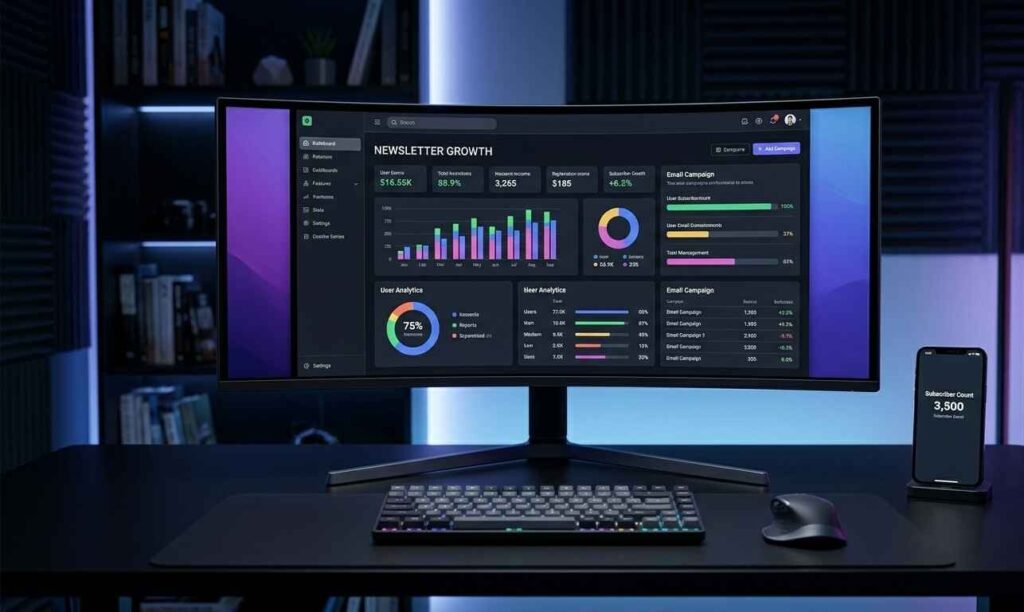
7. Build a Small Email Newsletter With Sponsorships
This one takes the longest to pay off but has incredible long-term potential — and it’s free to start.
Pick a niche topic you can write about weekly. Study techniques, student budgeting, a specific hobby, career advice for your field. Start a free newsletter on Beehiiv or Substack. Write consistently and genuinely — not promotional content, but actually useful stuff.
Once you hit even 500–1,000 engaged subscribers, small companies and creators in your niche will pay to reach your audience. Sponsorship rates for newsletters can range from $50 to several hundred dollars per mention, even at modest subscriber counts, if the audience is highly targeted.
It’s slow. Month one, you might have 30 subscribers. Month six, maybe 300. But the snowball effect is real, and once it’s built, a weekly email that takes two hours to write can earn consistent income.
Getting started: Choose a specific topic (not “general life advice” — too broad). Write 4–5 issues before you start promoting. Share it in relevant online communities — Reddit threads, Discord servers, niche Facebook groups. Focus on being genuinely useful, not on growth tactics.
The Mistakes That Slow Everyone Down
The biggest one: waiting until everything is perfect. The notes don’t need professional design. The YouTube channel doesn’t need a fancy intro. The newsletter doesn’t need a custom domain on day one.
The second mistake: chasing too many streams at once. Pick one or two from this list. Actually commit to them for 90 days before adding anything else. Passive income isn’t passive at the start — it requires upfront effort, and spreading that effort too thin means nothing gets momentum.
The third: expecting fast results. Almost every income stream here takes 2–6 months before you see meaningful returns. That’s normal. The students who stick it out are the ones who eventually wake up to $100 in their account from something they worked on last semester.
Where to Actually Begin
If I were starting from scratch today with $0 and a full course load, here’s what I’d do:
First, I’d take my best academic subject and create a detailed study guide PDF. List it on Gumroad for free, price it at $5. That’s my first product, and it costs nothing but time I’d spend studying anyway.
At the same time, I’d start a free Pinterest account around whatever niche I know well, pinning helpful content and linking to an Amazon affiliate account. Low effort, slow burn.
Within a semester, one of those would probably start gaining traction. Then I’d double down on whichever one showed signs of life.
None of this is get-rich-quick. But it’s real. It compounds. And unlike a part-time job, the work you put in today keeps paying you long after you’ve moved on.
Start small. Start now. Even $20 a month from something you built yourself feels different than $20 from an hourly shift — because the first one can grow without you trading more hours for it.
That’s the whole game.