

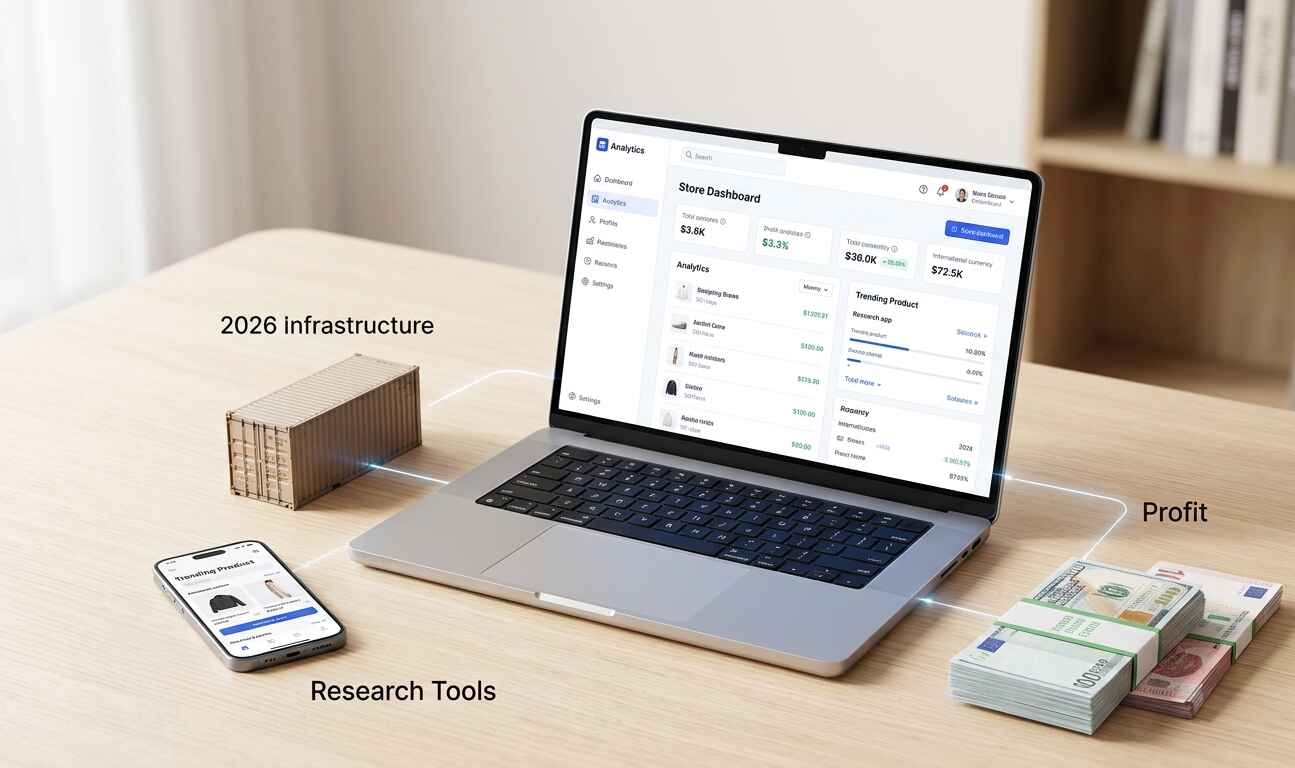
The first product I ever tried to dropship was a posture corrector.
It was 2021, I had watched approximately forty-seven YouTube videos about dropshipping, I was convinced I had found a winning product, and I spent three weeks building what I thought was a beautiful Shopify store. I ran Facebook ads. I spent around $200 on traffic.
I made zero sales.
Not one. Not even an add-to-cart. Just $200 gone and a store I stared at wondering what went wrong.
What went wrong was almost everything — wrong product research method, wrong audience targeting, wrong store design psychology, wrong pricing, wrong supplier. I had watched all those videos and still started completely wrong because most of that content was either outdated, oversimplified, or made by people selling courses rather than people actually running stores.
That experience cost me money and confidence. But it also taught me more than any video did. I came back, rebuilt, and eventually figured out what actually works — and what has changed heading into 2026.
This guide is the one I wish had existed when I started.
What Dropshipping Actually Is (And What It Isn’t)
Real quick, because this matters: dropshipping is a retail model where you sell products without holding inventory. When a customer places an order on your store, you purchase the item from a supplier who ships it directly to your customer. You keep the margin between what the customer paid you and what you paid the supplier.
You don’t touch the product. You don’t rent a warehouse. You don’t pack boxes.
What you do is run the store, handle marketing, manage customer service, and find products that sell.
What dropshipping is not: a passive income machine you set up in a weekend. People who pitch it that way are selling you something. It’s a real business that requires real work — just without the inventory risk that traditional retail carries.
With that clarity established, here’s how to actually build one in 2026.
Step 1: Understand What Has Changed in 2026
Dropshipping in 2026 looks meaningfully different from what it looked like in 2019 or even 2022. A few shifts matter a lot.
The era of generic AliExpress products with three-week shipping times is largely over. Customers have been trained by Amazon Prime to expect fast delivery, and a product that takes twenty-one days to arrive from a Chinese warehouse is going to generate chargebacks and negative reviews at a rate that kills stores fast.
The good news is that supplier infrastructure has improved enormously. US-based and EU-based dropshipping warehouses now exist for thousands of products. Apps like AutoDS, Zendrop, and Spocket have networks of suppliers who can ship domestically in five to seven business days or faster. This is table stakes now — if your shipping times are terrible, your business will be too.
The other major shift: AI tools have become genuinely useful for product research, ad copy, and store optimization. Ignoring them in 2026 puts you at a real disadvantage. I’ll mention where they fit as we go through the steps.
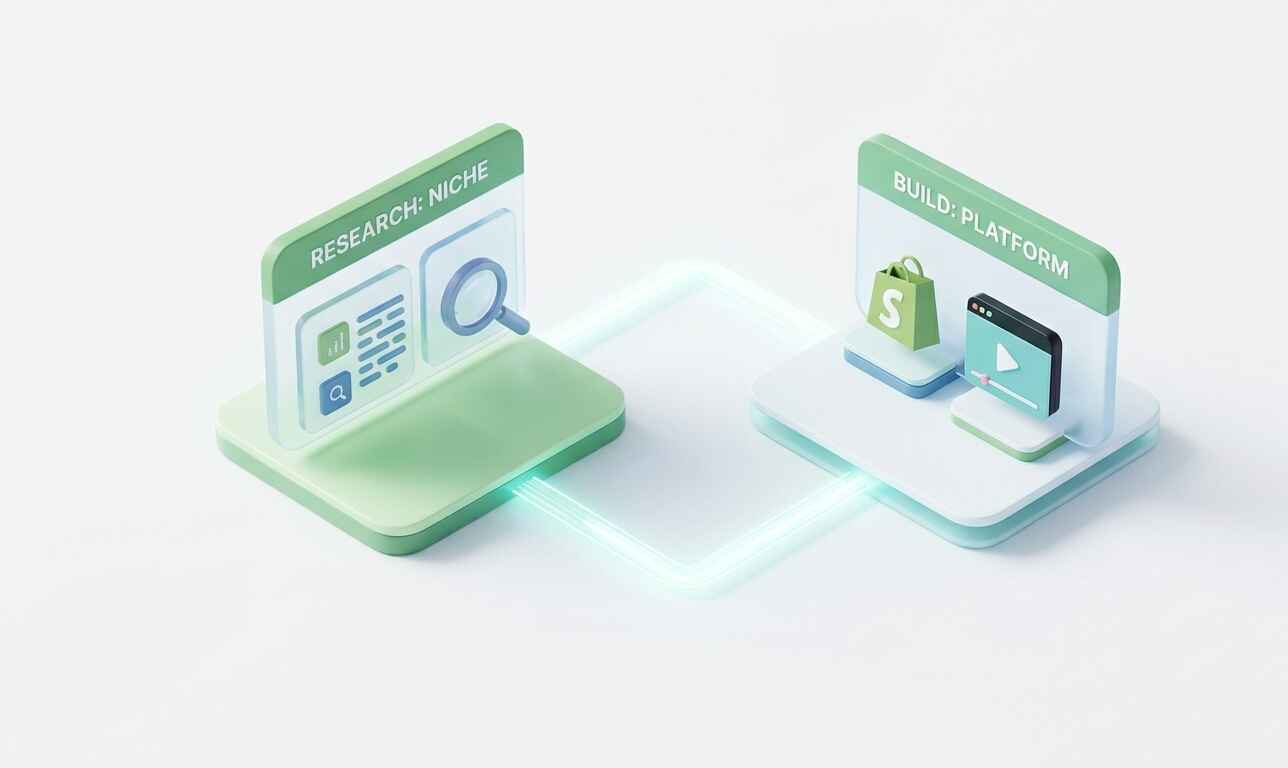
Step 2: Pick a Niche (Not Just a Product)
The first-time dropshipper temptation is to find a single “winning product” and build a store around it. This can work short-term, but one-product stores are fragile. Trends shift. Competitors copy. The ad costs rise as more people target the same audience.
A niche store — focused on a specific category of customer rather than a single item — is more durable. Think “pet supplies for small dog owners” rather than just “dog leash.” Think “home gym equipment for apartment dwellers” rather than just “resistance bands.”
A good niche has these qualities: there’s a passionate audience that buys repeatedly, the products have decent margins (ideally selling at $30–$150, where the impulse-to-value ratio is strong), and it’s specific enough that you can speak directly to the buyer.
For product research, the tools I actually use: AutoDS has a marketplace of trending products with sales data. Minea tracks what ads are running and getting engagement across Facebook, Instagram, and TikTok. Sell The Trend is another solid option. These tools cost money, but most have free trials — use the trial aggressively before deciding.
Free methods that still work: browse TikTok’s “TikTok Made Me Buy It” hashtag, look at what’s trending in Amazon’s Movers and Shakers section, and search “winning products” on YouTube filtered to the last thirty days to see what people are finding right now.
Step 3: Choose Your Platform
Shopify is still the industry standard for dropshipping stores, and with good reason. It integrates with every major dropshipping app, has a clean checkout experience, and the learning curve is manageable. Plans start at $39/month. There’s a three-day free trial and they often run dollar-per-month promotions for the first three months — Google it before you sign up to see what’s currently available.
WooCommerce (WordPress-based) is free to set up but requires more technical comfort. It can be more cost-effective long-term but the setup friction is higher for true beginners.
TikTok Shop has become a genuinely interesting option in 2026. The platform now allows creators and merchants to sell directly through TikTok videos and livestreams, and the organic reach potential means you can get sales without paid advertising if you can create engaging content. The trade-off is that it requires you to be comfortable on camera or work with creators.
For a first store, Shopify is still the recommendation. It just works, and when you’re learning, reducing technical friction matters.
Step 4: Find Reliable Suppliers
This is where most beginners make the mistake that killed my first attempt. I went straight to AliExpress, found the cheapest supplier, and didn’t think about shipping times, product quality, or communication responsiveness.
Here’s a better approach for 2026.
For US-market stores: Zendrop and Spocket both have large supplier catalogs with domestic shipping options. AutoDS has automated order fulfillment that connects to multiple suppliers. Supliful is specifically good for supplement and wellness products with US-based fulfillment.
For testing products before committing: CJdropshipping offers competitive prices and will work with you on custom packaging once you’re doing volume.
Before you list any product, order a sample to yourself. This sounds obvious and so many people skip it. You cannot write accurate product descriptions, set realistic expectations for customers, or evaluate the quality of what you’re selling without holding it in your hands. A $15–$30 sample order is the best product research money you can spend.
Evaluate suppliers on these factors: shipping time to your primary market, communication responsiveness (email them a question before you commit — see how fast and how clearly they respond), return policy for defective items, and whether they offer custom packaging if you eventually want branded packaging.
Step 5: Build Your Store
Your store doesn’t need to be elaborate. It needs to be trustworthy.
First-time visitors are making a snap judgment about whether your store looks like a place where real transactions happen. A cluttered store with inconsistent fonts, stock photos that look generic, no About page, and no visible contact information fails that test instantly.
Keep it clean. Use a minimal Shopify theme — Dawn is free and converts well. Write product descriptions that speak to the customer’s outcome, not just the product’s features. “Relieves lower back tension during long work-from-home days” lands differently than “adjustable lumbar support cushion.”
Pages you must have before you run any traffic: a real About page (even a brief one), clear shipping information including realistic timeframes, a returns and refunds policy, and a contact page with a real email address. The absence of any of these tanks trust immediately.
For copy and product descriptions, this is where AI genuinely helps. Tools like Claude or ChatGPT can draft strong product descriptions quickly, which you then refine based on what you know about your customer. Don’t publish AI copy without editing it — it often sounds polished but generic. Add specific details about the product and the customer you’re writing for.
Apps worth installing from day one: DSers or AutoDS for order automation, Vitals (an all-in-one app with reviews, upsells, and trust badges — it’s worth the monthly cost), and Judge.me for collecting product reviews.
Step 6: Drive Traffic
This is where most of the actual difficulty lives, and being honest about it matters.
Paid advertising is the fastest path to data. Facebook and Instagram ads allow you to put your product in front of a specific audience almost immediately. TikTok ads have lower competition than Meta for many product categories and have been performing well for visually compelling products. The challenge: you need a budget to test, and testing means spending money before you make money. Expect to spend $100–$300 testing a product before you have enough data to know if it’s viable.
Organic TikTok is the most exciting zero-cost traffic option in 2026. A single video showing a product in use — a genuine demonstration, not a salesy commercial — can generate thousands of views and real traffic. It’s not consistent and it’s not instant, but the ceiling is real. Some stores have exploded from a single viral video.
SEO for dropshipping is slow but compounds over time. Writing blog content around search terms your customers are using — buying guides, comparison posts, problem-solution articles related to your niche — builds traffic that doesn’t require constant ad spend.
Pinterest is underrated for certain niches, particularly home goods, fashion, fitness, and beauty. The audience skews toward buyers, and well-optimized pins can drive traffic for months.
A practical starting approach: pick one paid channel to test your product fast and get initial data, and simultaneously build one organic channel (TikTok content or Pinterest) as a longer-term traffic foundation.
Step 7: Handle Customer Service Like It’s Your Reputation — Because It Is
This step gets skipped in almost every dropshipping guide, and it’s one of the reasons dropshipping has a reputation problem.
Your customers don’t know or care that you’re dropshipping. They bought from your store. When something arrives late, arrives damaged, or doesn’t match the description — you own that experience entirely. How you handle it determines whether they leave a PayPal dispute or a five-star review.
Set up a dedicated business email (Google Workspace starts at $6/month, or use a free Zoho Mail account tied to your domain). Respond to customer inquiries within 24 hours. When something goes wrong — and it will — refund generously and without making the customer fight for it. The cost of one refund is much less than the cost of a chargeback, a bad review, or your payment processor flagging your account.
Gorgias is the customer service tool most serious Shopify stores use. It integrates directly with Shopify so you can see order details while handling emails. It costs money, but if you’re handling volume, it saves enormous time.
The Mistakes That Hurt People Most
Skipping product validation and building an elaborate store around an untested product. The store is not the hard part — finding what sells is the hard part. Validate the product idea before you invest in the store.
Choosing products with too-thin margins. If you’re buying a product for $8 and selling it for $14, there’s no room for ad spend, returns, transaction fees, and platform costs. You need enough margin — typically selling at three to four times your product cost — to sustain a viable business.
Ignoring shipping times because a product “looks good.” In 2026, long shipping is a customer service disaster waiting to happen. Build stores around suppliers with acceptable shipping windows from the start.
Giving up after the first failed product test. Most dropshippers test multiple products before finding one that works. Each failed test is data — it tells you something about the audience, the creative, the price point, or the product itself. The learning compounds even when the sales don’t.
Trying to run ads without understanding the basics. Before you spend money on Facebook or TikTok ads, spend a few hours understanding how ad targeting works, what makes a strong creative, and how to read basic metrics like CTR, CPM, and ROAS. Running ads blind is expensive.
What a Realistic First Three Months Looks Like
Month one is almost entirely setup and learning: choosing a niche, building the store, finding suppliers, ordering samples, launching your first product test. Expect to spend money without making much back.
Month two is testing and iterating: running ads or creating organic content, watching what happens, adjusting product pages, testing different creatives, possibly pivoting to a different product based on what the data tells you.
Month three is where things start to clarify: if you’ve found a product that’s getting sales, you’re optimizing and scaling. If not, you’re still testing — but you’re doing it smarter than month one.
Realistic income in the first three months: anywhere from zero to a few hundred dollars. The people who claim they made $10,000 in their first month either had prior experience, got lucky with a viral product, or are exaggerating for content engagement. Treat those numbers as outliers, not benchmarks.
One Thing Most Guides Won’t Tell You
The dropshippers who build something lasting aren’t the ones who found the best product. They’re the ones who built real brand equity — a recognizable store identity, a social media presence that customers follow, an email list they own.
A pure dropshipping store with no brand is permanently one better-funded competitor away from irrelevance. The stores that survive and scale are the ones that gradually become something more than a product page with a payment link.
Start as a dropshipper. Build toward a brand. That’s the arc that leads somewhere worth going.
The barrier to starting has genuinely never been lower. The tools are better, the supplier infrastructure is faster, and the platforms are more accessible than at any point before. What that also means is that execution and persistence are the actual differentiators now.
Start small. Test honestly. Learn from what doesn’t work. Keep going.