


My cousin reached out one evening in a bit of a panic. She’d just been laid off from her office job and needed income fast — but she had a degree in mathematics and had been helping college students prep for exams on the side for years. She asked me, “Do you think I could actually do this full-time? Like, online?”
Three months later, she was booked solid, making more per hour than she ever did at her 9-to-5.
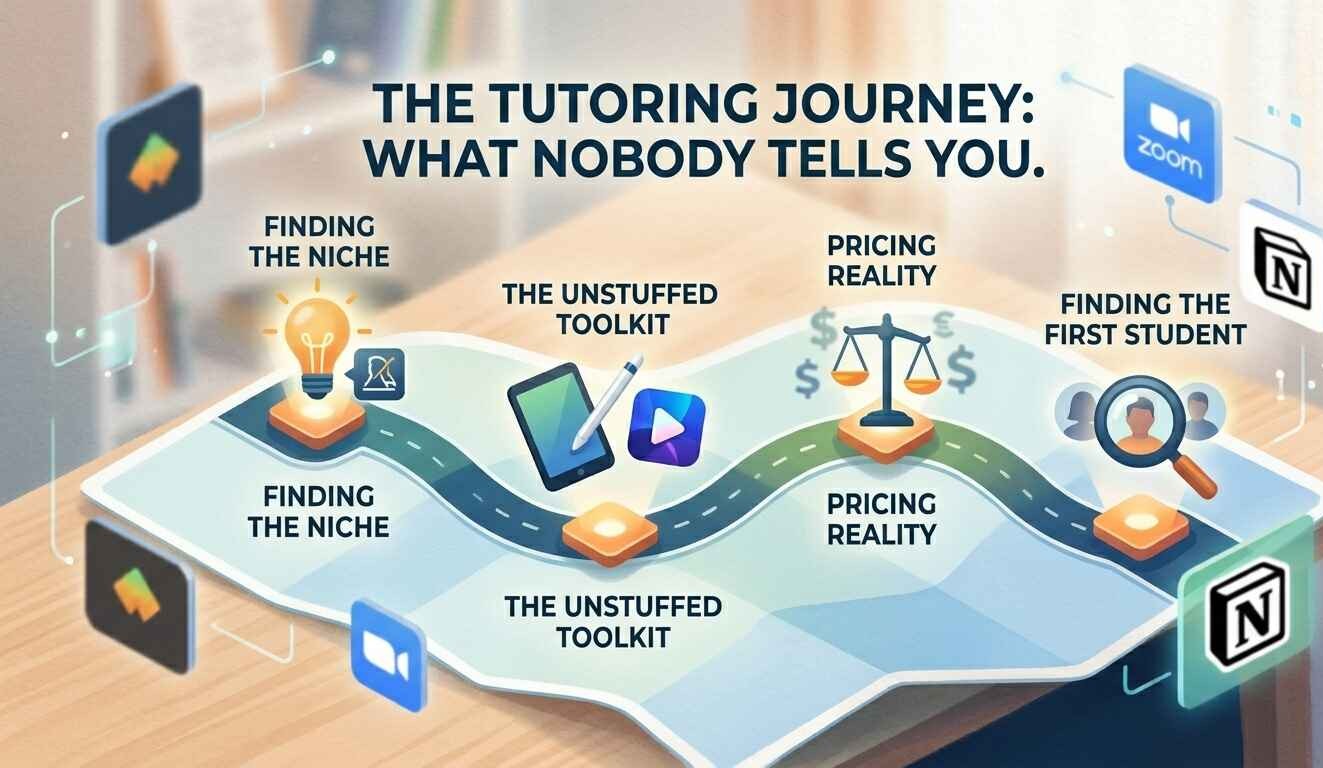
That experience made me dig deep into the world of online tutoring — how it works, what tools you actually need, what mistakes trip people up early on, and what separates tutors who build a sustainable income from those who give up after two sessions. Here’s everything I wish someone had laid out clearly from the start.
First, Be Honest About What You’re Good At
This sounds obvious, but a lot of people skip it. Before you think about platforms or pricing, sit down and list the subjects where you don’t just know the material — you can explain it to someone who’s confused without getting frustrated.
There’s a real difference. I know a guy with a PhD in chemistry who is a terrible tutor because he can’t step back into the mindset of someone who doesn’t already get it. Meanwhile, someone with a solid B+ understanding of algebra but patience made of steel can be extraordinary.
Ask yourself:
- What subjects did people come to me for help with, even casually?
- What do I enjoy explaining, not just knowing?
- What age group am I comfortable teaching — elementary kids, high schoolers, adults, professionals?
Your answers will shape everything else, including which platform fits you best and how you price yourself.
Choosing Where to Tutor: Platforms vs. Going Solo
This is genuinely the first real fork in the road, and most people don’t think it through enough.
The Platform Route
Sites like Tutor.com, Wyzant, Preply, Cambly, Superprof, and Chegg Tutors already have traffic, built-in payment processing, and a matching system. You create a profile, list your subjects, set availability, and wait for students to find you.
The trade-off: platforms take a commission — often 15% to 40% of your earnings. Preply, for example, takes 33% of your first 20 hours with a student, then drops it as the relationship grows. That’s significant, especially early on.
But for complete beginners? The platform route is worth it. You don’t have to worry about getting clients, building a website, or handling awkward payment conversations. You just show up and teach.
The Independent Route
This means finding your own students — through Facebook groups, local school networks, word of mouth, neighborhood apps like Nextdoor, or your own website. You keep 100% of what you charge and have total control over your schedule and policies.
The catch: you have to find your own students. That takes time. Most successful independent tutors started on a platform, built up testimonials and confidence, then transitioned out.
My honest recommendation: Start on a platform. Don’t romanticize going independent before you’ve even taught a few paid sessions.
Setting Up Your Home Tutoring Space
You don’t need a studio. But you do need a few non-negotiables.
Good lighting. Natural light from the side is ideal. Lighting from behind you creates a silhouette — students will be looking at a dark blob instead of a face. A simple ring light (under $30 on Amazon) solves this completely.
A decent microphone. Your laptop’s built-in mic picks up keyboard clacks, room echo, and the hum of your HVAC system. A USB mic like the Blue Yeti Nano or even the Fifine T669 will make you sound professional without spending much.
A stable internet connection. Wired ethernet is always better than Wi-Fi if you can swing it. If you’re on Wi-Fi, at least move closer to the router during sessions. A choppy connection is the single most disruptive thing during online tutoring — more than noise, more than lighting.
A clutter-free background. You don’t need a bookshelf full of academic books (though that does help with perception). You just need something that isn’t a pile of laundry. A plain wall or a neat corner works fine.
Tools You’ll Actually Use
Zoom or Google Meet — Both work great. Zoom has a whiteboard feature baked in now, which is useful. Google Meet is already on most people’s accounts and is simpler to launch.
Miro or Bitpaper — Virtual whiteboards where both you and the student can write. Invaluable for math, science, and diagram-heavy subjects. Bitpaper is free and easy to use without an account.
Google Drive — Share worksheets, notes, and homework directly in the session. Students can work on shared Google Docs in real time.
Notion — Great for tracking student progress, keeping session notes, and managing your schedule if you grow beyond a couple of students.
Calendly — Lets students book sessions on their own without the back-and-forth of “does Tuesday work? what about Thursday at 4?” Connects to your Google Calendar and blocks times automatically.
You don’t need all of these on day one. Start with Zoom and a whiteboard. Add tools as your workflow demands them.

Pricing Yourself Without Underselling
Here’s something I see constantly: new tutors charge $10 or $15 an hour because they don’t feel “qualified enough” yet. That’s almost always a mistake — not just financially, but psychologically. Low prices attract students who don’t value the service, who cancel last minute, and who ghost you for missed payments.
Look at what tutors in your subject area and level are charging on Wyzant or Preply. Elementary school subjects typically run $25–$45/hour. High school and standardized test prep (SAT, ACT, MCAT) often runs $60–$120+. Language tutoring on Preply averages around $15–$30 depending on the language.
Start somewhere in the middle-lower range for your category. Not the rock bottom. As you collect reviews and experience, raise your rate. Even a $5 increase every few months adds up.
Pro tip: Offer a discounted “trial session” — maybe 30 minutes at half your normal rate. It lowers the barrier for a student to try you and gives you a chance to show your value before they commit.
Getting Your First Students
This is where most people get stuck. You’ve set everything up, you’ve signed up on a platform, and… nothing happens.
Here’s what actually works:
Fill out your profile completely. Platforms favor complete profiles in their search algorithms. A blank “About Me” section or a missing profile photo tanks your visibility. Write a genuine, specific bio — mention the specific exam or level you specialize in, not just “I teach math.”
Ask people you know. This sounds embarrassing, but it works. Post on your personal Facebook or Instagram: “Hey, I’m now offering online tutoring in [subject] — if you know anyone who could use help, I’d love a referral.” You’ll be surprised how quickly word spreads among parents especially.
Join local community groups. Facebook groups for local parents are gold. A genuine, non-spammy post — “Hi, I’m a tutor specializing in middle school math, happy to answer questions or offer a free 20-minute consultation” — can book you up faster than any platform.
Reddit. Subreddits like r/learnmath, r/ACT, or r/languagelearning have people actively asking for help. Don’t spam, but if you engage genuinely and mention you tutor, you’ll get DMs.
What to Actually Do in a Session
A lot of first-time tutors treat sessions like lectures. They talk, the student listens, time runs out. That’s not tutoring — that’s a YouTube video the student could’ve watched for free.
Effective tutoring is diagnostic. Before you explain anything, figure out exactly where the student’s understanding breaks down. Ask them to walk you through a problem. Watch where they hesitate or get confused. That’s the thing to fix.
Keep sessions structured:
- Quick recap of last session (5 min)
- Review homework or questions the student struggled with (15 min)
- New concept or skill with guided practice (20 min)
- Independent practice while you observe (10 min)
- Wrap up + homework assignment (5 min)
This works for a 55-minute session. Adapt as needed. The point is to make students do things, not just watch.
Mistakes That Trip Up New Tutors
Taking every student. You will have students who cancel constantly, argue about your rates, or simply don’t do the work and then blame you. It’s okay to decline or discontinue a student relationship. Your time has value.
No cancellation policy. Set one before your first session. Something like: “Cancellations with less than 24 hours’ notice are charged 50%.” Write it in your profile or in a simple message when you confirm a new student. Most good students won’t balk at this.
Skipping the feedback loop. At the end of each session, ask: “What made sense today? What’s still fuzzy?” This isn’t just polite — it tells you what to cover next time and makes students feel heard.
Burning out by over-scheduling. It’s tempting when you start getting requests to fill every slot. Don’t. Teaching is mentally taxing. Leave gaps between sessions to reset. I’ve seen tutors go from enthusiastic to completely done within 6 weeks because they didn’t protect their energy.
Growing Beyond Your First Few Students
Once you have a few regular students and some reviews under your belt, growth gets easier.
Ask satisfied students (or their parents) for a quick written testimonial. Post it on your profile, your social media, wherever you promote yourself.
Consider creating a simple one-page website using Carrd (free), Notion, or Google Sites. Nothing fancy — just your name, what you teach, your pricing, and a Calendly link to book. Even a basic page signals professionalism.
If you teach a specific exam prep area (SAT, IELTS, bar exam, USMLE), create a free resource — a PDF guide, a short video tip, a practice worksheet — and share it in relevant communities. This positions you as knowledgeable and drives inbound interest without feeling like self-promotion.
The Honest Part: It Takes a Few Months to Gain Traction
My cousin didn’t go from zero to fully booked overnight. Her first month, she had three students. By month three, she had eleven regular students and a waitlist. By month five, she raised her rates and dropped her slowest-paying students.
The ramp-up is real. If you expect instant results, you’ll quit too soon. If you treat it like building something — with consistent effort, learning from each session, and gradually improving your systems — it absolutely works.
The demand for online tutoring isn’t going anywhere. Parents want personalized help for their kids. Adults are learning new skills and languages. Professionals need certification prep. Someone out there right now needs exactly what you know — they just haven’t found you yet.
Set up your space. Pick a platform. Book that first student. The rest comes from doing the work.